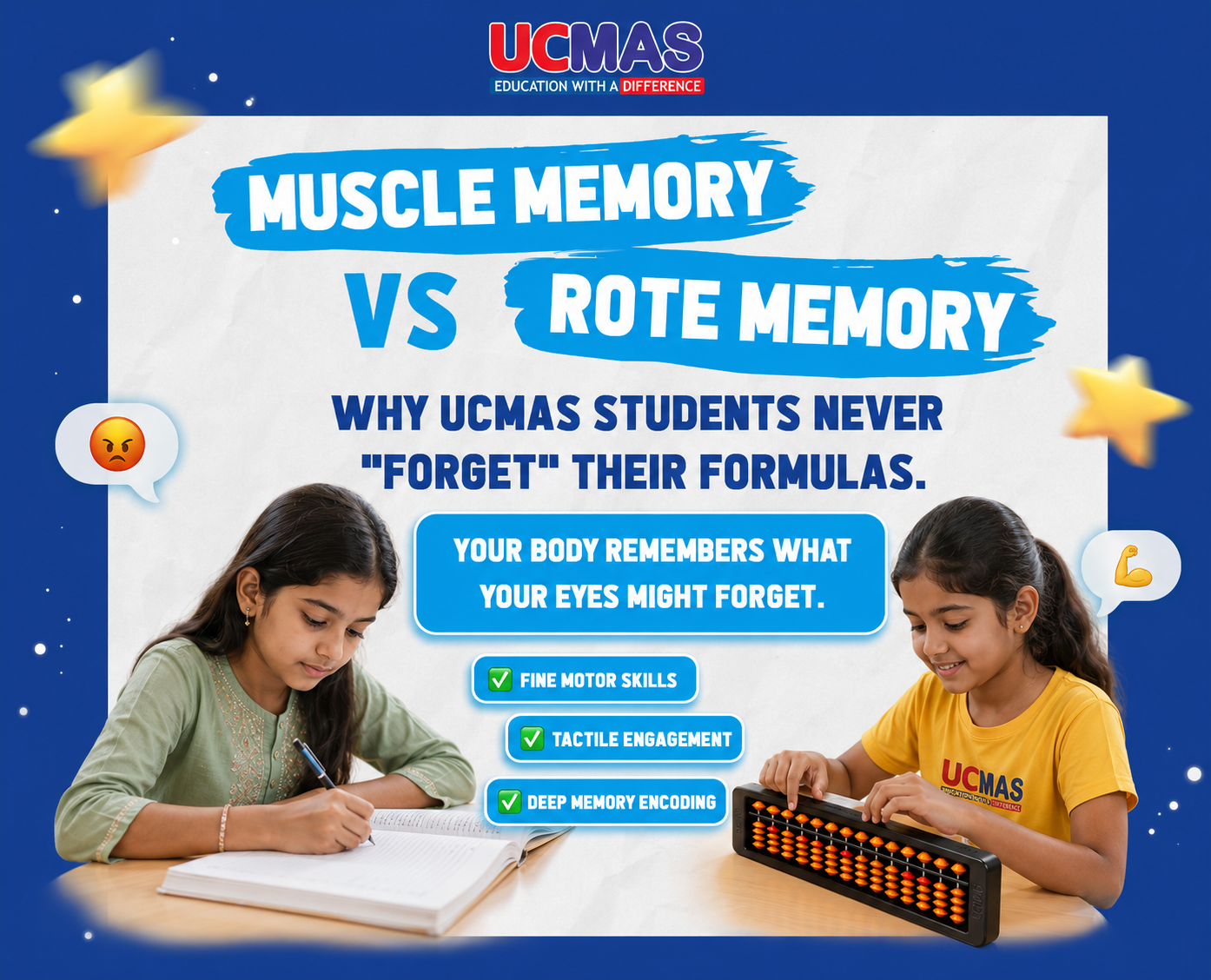
Every parent has seen it happen. A child spends days preparing for an exam, confidently answers every question, comes home smiling, and a few weeks later struggles to remember much of what they learned. It is not because they are lazy or incapable. More often, it is because memorizing information for a test is very different from truly learning it. That is why educators today are placing greater emphasis on hands-on learning, an approach that encourages children to actively engage with what they are learning rather than simply repeating it.The UCMAS Abacus Programme is built around this philosophy. While many people think it is only about faster calculations, the real objective is to help children develop concentration, visualization, memory and thinking skills through structured practice.
Learning That Stays
Think about riding a bicycle. Even if you have not ridden one for years, your body quickly remembers what to do. Some forms of learning become deeply rooted because they involve repeated physical action. Children experience something similar while learning with an abacus. Every movement of a bead requires attention, coordination and decision-making. Instead of remembering only an answer, they remember a process. Over time, that process becomes familiar and natural.
Why Touch Makes Learning Stronger
Young children naturally explore the world through their hands. They build with blocks, shape clay, solve puzzles and touch almost everything around them. These experiences are not random. They help the brain understand, organise and remember information. When children move abacus beads with their fingers, they receive constant sensory feedback. Their eyes follow the movement, their hands respond with precision and their mind stays focused on the calculation. This combination creates a richer learning experience than simply looking at numbers on a page.
Small Finger Movements, Big Mental Benefits
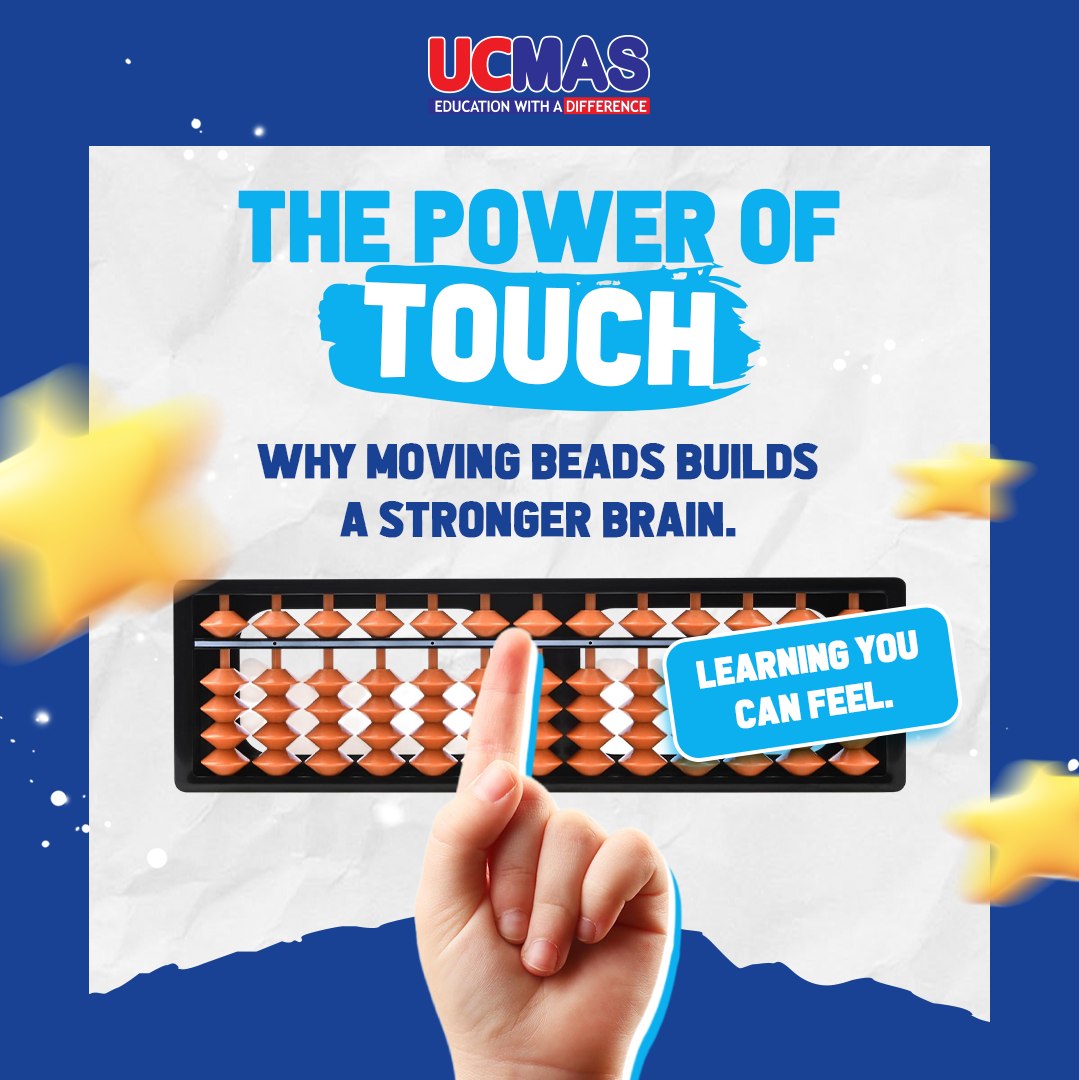
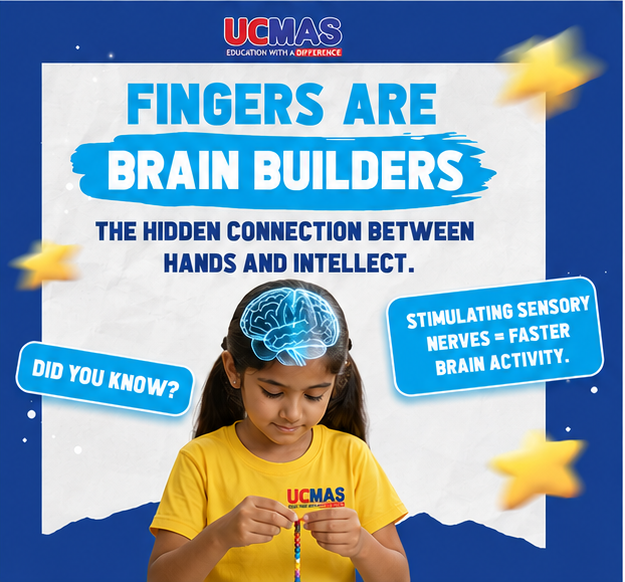
At first glance, moving tiny beads across an abacus may seem like a simple finger exercise. In reality, every movement asks the brain to coordinate vision, touch, timing and attention. With regular practice, children often become more comfortable concentrating for longer periods, visualising information and solving problems step by step. These are valuable skills that support learning in many school subjects, not just mathematics.
Growing Beyond the Physical Abacus
As children gain confidence, they gradually stop depending on the physical abacus. Instead, they begin to picture it in their minds and perform calculations through mental visualisation. This transition is one of the unique aspects of the UCMAS methodology. Mathematics becomes a tool for developing focus, imagination and confidence, rather than just finding the correct answer.
Learning in a Screen-First World
Today’s children spend more time with digital devices than ever before. Technology has many benefits, but it cannot completely replace hands-on experiences. Activities that involve movement, touch and active participation encourage patience, persistence and careful thinking. They also give children a welcome break from passive screen time while keeping their minds fully engaged.
The Bigger Picture
Parents often enrol their children in abacus classes hoping they will become faster at maths. Many are pleasantly surprised to notice improvements in other areas as well. Children frequently become more attentive in class, more organised in their thinking and more confident when tackling new challenges. These changes do not happen overnight, but they grow steadily through consistent practice.
Education is not only about helping children score well in the next exam. It is about giving them the ability to understand, remember and apply what they learn throughout life. When children actively participate in the learning process, they build stronger foundations that support them for years to come.The UCMAS Abacus Programme follows this simple idea. By combining movement, visualisation, concentration and structured practice, it helps children develop learning habits that extend far beyond mathematics. The result is not just quicker calculations, but greater confidence, sharper focus and a lifelong love for learning.