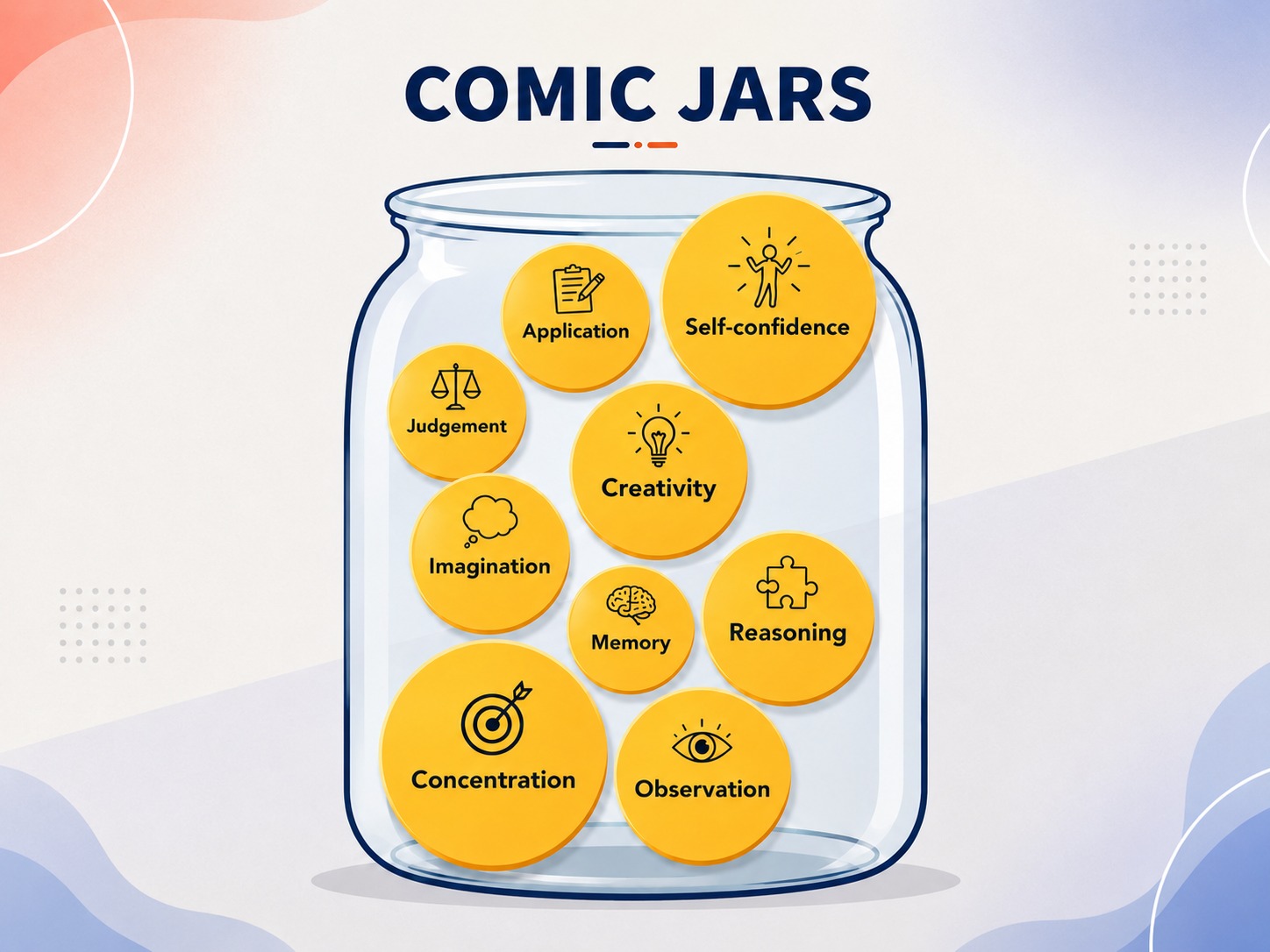
If you're a parent exploring ways to improve your child's learning abilities, you've probably come across abacus classes. Along with the praise, you've likely also seen questions such as:
- Do abacus classes actually work?
- Is it just about faster maths?
- Will my child really benefit in school?
- Is the investment worth it?
These are fair questions. Every parent wants to make informed decisions before enrolling their child in any extracurricular program.
The short answer to above questions is yes, abacus classes do work, but perhaps not in the way many people initially expect. While children certainly become faster at mental calculations, the most valuable outcomes often extend far beyond mathematics.
Let's take a practical look at what children actually gain from abacus training through structured programmes like the UCMAS Abacus Programme.
Understanding What Abacus Training Really Is
Many people assume abacus classes simply teach children to calculate quickly using beads. That's only the beginning. Leading programmes such as the UCMAS Abacus Programme are designed to develop cognitive skills alongside mental calculation.
As children progress, they gradually learn to visualize the abacus in their minds. Instead of relying on physical beads, they perform calculations by imagining bead movements mentally. This process engages multiple areas of the brain simultaneously, requiring children to listen carefully, observe accurately, process information quickly, remember multiple steps, visualize numbers, and maintain concentration under time pressure.
Over time, these repeated mental exercises strengthen cognitive abilities that children use in everyday learning, not just during mathematics lessons.
Result 1: Faster Mental Calculation
The most obvious improvement is speed. Children who regularly practice abacus techniques often solve arithmetic problems much faster than conventional methods. They become comfortable with addition, subtraction, multiplication, division, and large-number calculations without depending on paper or calculators. This speed gives students greater confidence during classroom tests and competitive exams where time management matters.
However, speed alone is not the primary objective. The real value lies in how children achieve that speed, through improved mental processing rather than memorizing shortcuts.
Result 2: Better Concentration
One of the first changes many parents notice after enrolling their child in abacus classes is improved focus. Abacus exercises demand complete attention. During practice sessions, children must listen carefully, keep track of multiple calculations, avoid losing their place, and maintain mental visualization.
As children continue training week after week, their ability to concentrate for longer periods naturally improves. This increased focus often carries over into homework, reading, classroom learning, and exam preparation.
Result 3: Improved Memory
Abacus training encourages children to think mentally rather than rely on paper for every calculation. As they hold and process numbers in their minds, their working memory becomes stronger. This not only improves mental calculation but also supports better recall of instructions, classroom concepts, number patterns, and other information that children use every day.
Result 4: Increased Confidence
Many children develop anxiety around mathematics because they struggle with calculations. When they begin solving problems independently and quickly, they experience success more frequently. That success gradually builds confidence.
Confident children are often more willing to answer questions in class, attempt challenging problems, participate in activities, and learn from mistakes without fear. Parents frequently notice that this confidence extends beyond mathematics into other areas of learning.
Result 5: Better Observation and Listening Skills
Accuracy is essential in abacus calculations. Children must pay close attention to every spoken number and every bead movement. This constant practice sharpens both observation and listening skills. These abilities benefit children during reading, classroom instruction, science activities, and problem-solving tasks, where careful attention to detail plays an important role.
Does Scientific Research Support Abacus Training?
Several studies conducted in different countries have explored the effects of abacus training on children's cognitive development, providing encouraging evidence for structured mental maths programmes.
Research suggests improvements in areas such as working memory, attention, mental calculation, processing speed, and visual-spatial abilities. While the extent of improvement varies depending on factors such as practice consistency, age, and individual learning styles, the overall findings indicate that structured abacus training can positively influence cognitive skills beyond arithmetic.
Like learning a musical instrument or a new language, the greatest benefits come through regular, long-term practice.
Is Abacus Worth It?
So, do abacus classes really work? The answer is yes, but their benefits go far beyond faster mental maths. A well-designed abacus programme, such as the UCMAS Abacus Programme, helps children develop essential cognitive skills such as concentration, memory, observation, listening, visualization, and confidence. These are lifelong abilities that support learning across subjects, not just mathematics.
Like any skill, the results don't happen overnight. Regular practice and patience play an important role in helping children get the most from their training. Over time, many parents notice positive changes not only in their calculation abilities but also in their overall approach to learning.
If you're looking for an activity that encourages children to think independently, stay focused, and build confidence while strengthening their mental abilities, abacus classes are a worthwhile investment. Whether you choose the UCMAS Abacus Programme or another structured programme, consistent practice helps lay a strong foundation for learning that can benefit children throughout their academic journey and beyond.