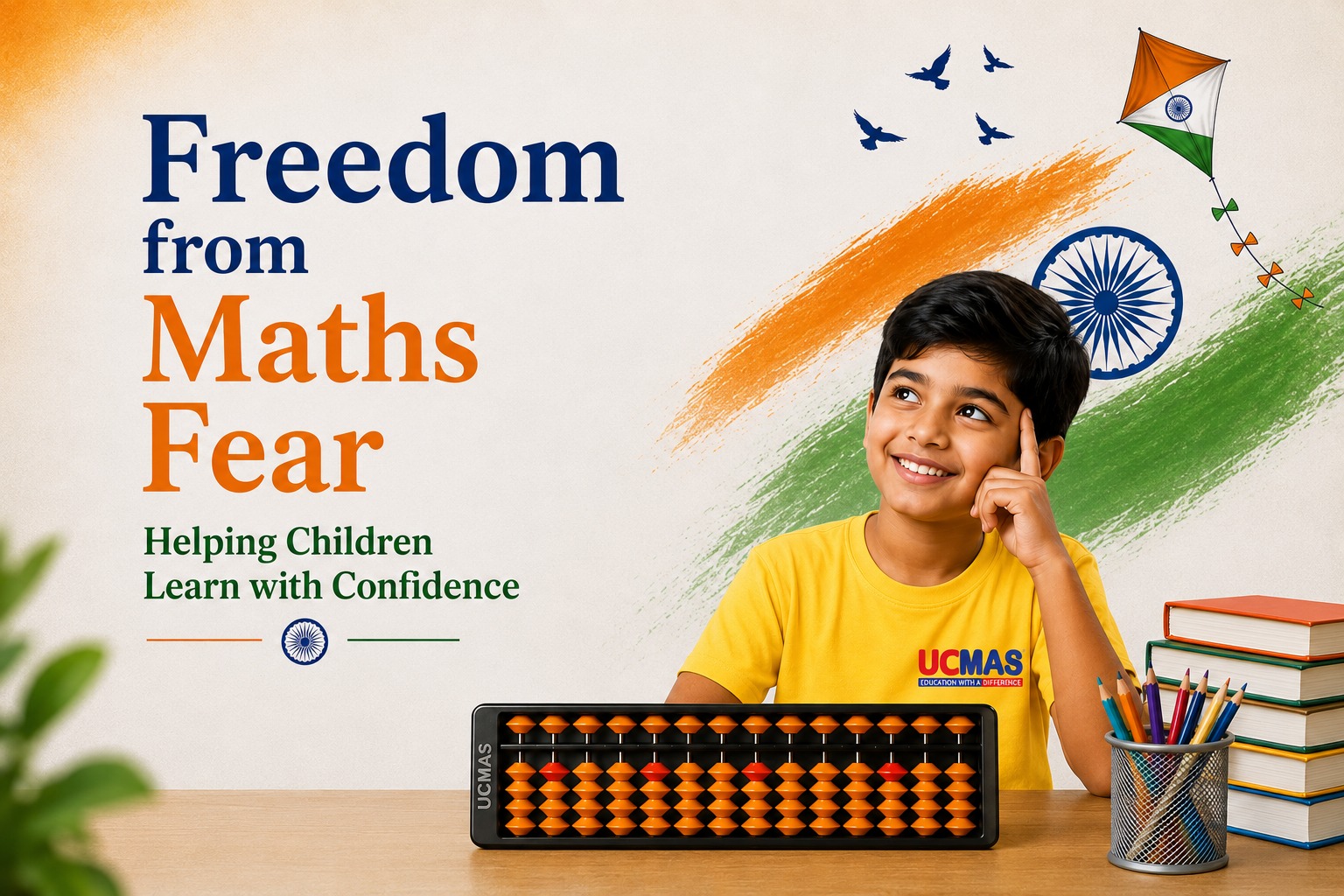
Independence is not only about being free. It is also about having confidence to face challenges. For children, that can mean freedom from the fear of Maths.
As India celebrates Independence Day, we reflect on freedom. For children, it can mean asking questions, making mistakes and learning confidently. One challenge children face is Maths fear. A child who feels anxious about numbers may hesitate before attempting a problem or lose confidence after getting an answer wrong. Over time, Maths can feel like something to avoid. Confidence can grow with the right support.
Understanding Maths Fear in Children
Maths fear does not always mean a child cannot understand mathematics. Often, it is linked to confidence. When children struggle with calculations or feel pressure to get every answer right, they may start believing they are not good at Maths. Helping children feel comfortable with numbers is as important as teaching them how to solve problems.
From Fear to Confidence
A structured and progressive learning approach can help children become more comfortable with numbers. Abacus-based learning gives children a visual and practical way to work with numbers. With regular practice, children become familiar with calculations and gradually gain confidence. This can help children build comfort with Maths.
At UCMAS, children progress through structured levels and practice. As they advance, they move from working with a physical abacus towards mental visualisation, learning to imagine and work with the abacus in their mind. This forms an important part of the UCMAS abacus programme. This process involves concentration, memory, visualisation and mental processing. With practice, children can approach Maths and mental calculations more positively.
Instead of thinking, "I can't do this," they may start thinking, "Let me try."
Freedom from the Fear of Getting It Wrong
One of the biggest barriers to learning is the fear of making mistakes.
But mistakes are a natural part of learning. Getting an answer wrong does not mean a child has failed. It gives them an opportunity to understand the problem and try again. When children become comfortable with trying, making mistakes and trying again, they can develop a more positive approach to challenges. The goal is not to eliminate mistakes, but to become less afraid of them.
Building More Than Mathematical Skills
Abacus learning can involve more than numerical calculations. The learning process can help children practise concentration, memory, visualisation, reasoning and self-confidence.
These skills can be useful beyond the classroom. A child who learns to focus, work through a challenge and keep trying is developing habits that can support learning in many areas.
The goal is not simply faster calculations. It is to help children become confident learners who approach problems with focus and persistence.
How Parents Can Help
Parents can make a real difference in how children feel about Maths.
Instead of immediately giving the answer, ask, "How would you solve it?"
Rather than focusing only on whether the answer is correct, ask, "How did you arrive at that answer?"
When a child makes a mistake, try saying, "Let's see where we can try again."
These changes can help children see Maths as something to explore rather than fear.
A Different Kind of Freedom

Independence Day reminds us of the value of freedom and the opportunities it brings. For our children, let's also give them the freedom to learn without fear.
Freedom to attempt. Freedom to make mistakes. Freedom to keep trying. And most importantly, freedom from the fear of Maths.
At UCMAS, the journey begins with an abacus, but the learning goes beyond calculations. Through structured practice, children can develop confidence while strengthening concentration, memory, visualisation, reasoning and problem-solving skills.
When a child becomes less afraid of a challenge, they become more willing to face it.
This Independence Day, let's give our children another kind of freedom: the confidence to say, "I can try."
Happy Independence Day!